
Brazil's coffee calendar: plan your sourcing around the harvest.
Arabica on-year: record crop expected
Latest official estimate. Source: Conab, 3rd crop survey, September 2026
[Harvest progress note: to be updated]
Arabica follows a biennial cycle; 2027 is expected to be an off-year for arabica, subject to weather.
Arabica on-year: record crop expected
Crop year 2026/27 · Source: Conab, 3rd crop survey, September 2026
Harvest calendar
Hover a row for details; select a region to open its profile.
- JFMAMJJASOND
Indicative harvest windows. Timing varies with weather, altitude and crop year.
The crop cycle
- 01
Flowering
Sep–NovRains trigger flowering; a good bloom sets the potential of the next crop.
- 02
Cherry development & bean filling
Oct–MarCherries grow and beans fill during the rainy season.
- 03
Harvest
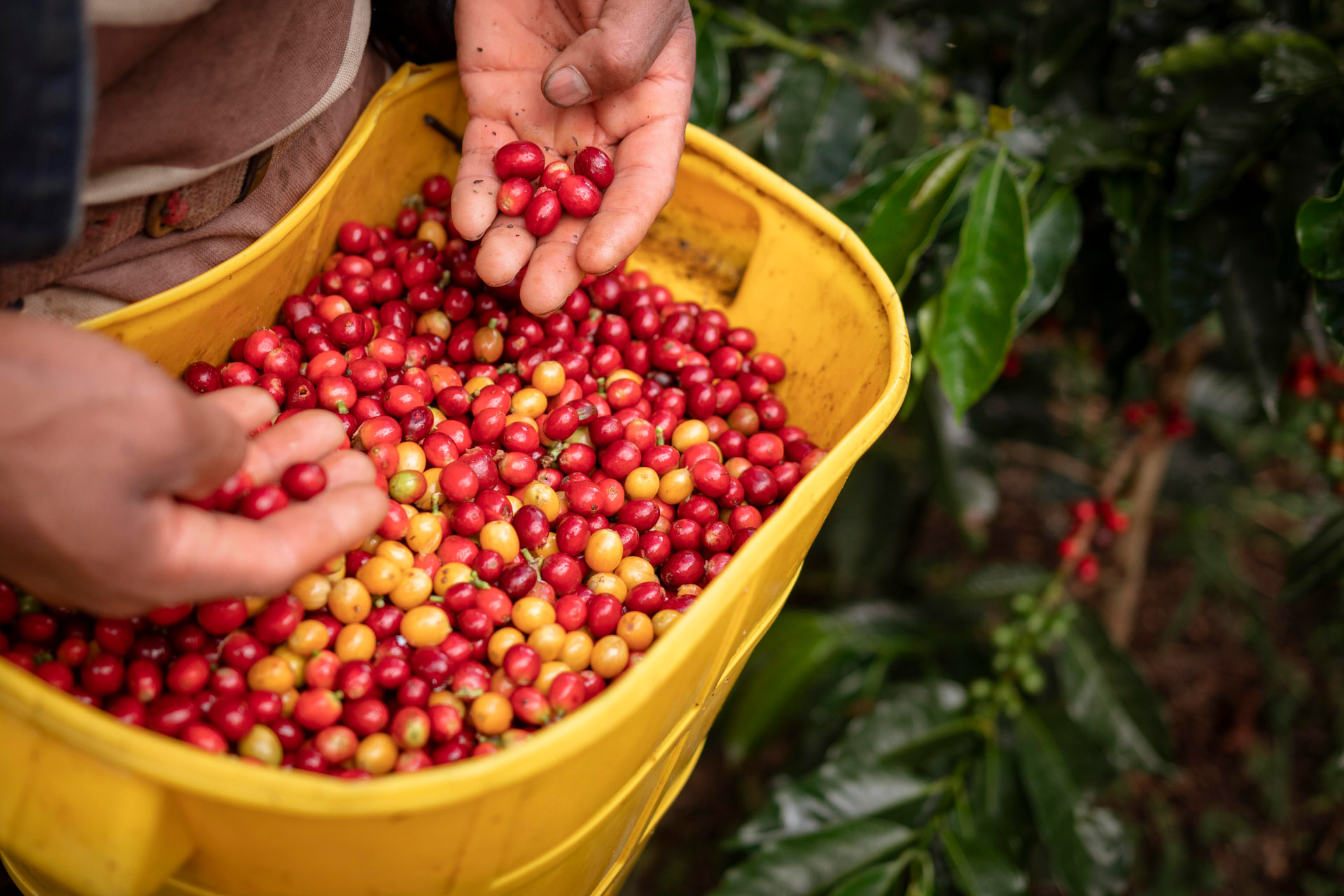
Apr–Oct (by region)Conilon first, then arabica from the earliest to the highest regions.
- 04
Drying & resting
2–8 weeks after pickingCoffee is dried, rested, hulled, graded and cupped.
- 05
Export
Crop year Jul–JunNew crop is offered and shipped; trade statistics follow a July to June crop year.
When coffee is available to ship
New-crop offers from May; shipments build May–Aug.
New-crop shipments from Jul–Aug; main export months Sep–Dec; old crop only Jan–May (tighter choice).
Offers from Jul–Aug; shipments Aug–Dec.
Offers Aug–Oct after drying, resting and cupping; shipments Oct–Jan.
Follows the underlying coffee line; allow extra time for chain-of-custody documents.
Available year-round, built from current and old-crop stocks.
January to May is the off-season: only old crop is available, with a tighter choice. Indicative only.
Weather risk calendar
Weather in Brazil moves both world prices and the quality available. These are the windows buyers watch.
Jun–Aug · Arabica in Sul de Minas, Paraná, São Paulo and Cerrado. Can reduce the following year's crop and move prices sharply.
Sep–Oct · A poor bloom limits the size of the next crop.
Jan–Feb · Dry spells can mean smaller beans, lower screens and lighter yields.
May–Aug · Rain during picking and drying can affect cup quality and raise defects.
On-years and off-years
Arabica tends to alternate between a large on-year crop and a smaller off-year crop, because a heavy crop exhausts the trees. Conilon, largely irrigated and clonal, is more stable year to year.
For buyers, on-years usually mean wider choice and more room on price; off-years mean tighter supply and firmer differentials. Contracting part of your needs forward helps smooth the cycle.
Arabica follows a biennial cycle; 2027 is expected to be an off-year for arabica, subject to weather.
Arrival planner
Pick a coffee line, destination and the month you want the coffee to arrive.
- Offer / contract by
- Sep
- Target shipment from Santos
- Nov
- Arrival in North America
- Dec
Indicative only. Based on the longest transit time; depends on carrier, routing and transshipment.
Plan your next crop with usSourcing tips by season
Contract new crop early
Before or during harvest you get the widest selection.
Buy mid-harvest quality
The best quality usually comes mid-harvest, June to August for most arabica regions.
Stagger your shipments
Monthly shipments from September to December give steady supply.
Wait for specialty
Specialty lots appear later because of drying, resting and cupping.
Plan long routes ahead
For Asia and the GCC, plan arrivals well ahead of peak roasting seasons and use hermetic packing.
Harvest questions
When is the coffee harvest in Brazil?
Brazil harvests from April to October. Conilon starts in April; arabica runs mainly from May to September, with mountain regions finishing as late as October. Timing varies with weather, altitude and crop year.
When is Brazilian conilon harvested?
Conilon is harvested roughly from April to July or August, in Rondônia, Northern Espírito Santo and Bahia, with the peak around April to June.
When is new-crop Brazilian coffee available to ship?
Indicatively, new-crop Conilon ships from May, commercial arabica from July or August with main export months September to December, and specialty micro-lots from October after drying, resting and cupping.
What is the biennial cycle in arabica?
Arabica tends to alternate between larger on-year and smaller off-year crops, because a heavy crop exhausts the trees. Conilon is more stable from year to year.